Responds to demand
The charger can adjust its output as other household loads switch on and off.
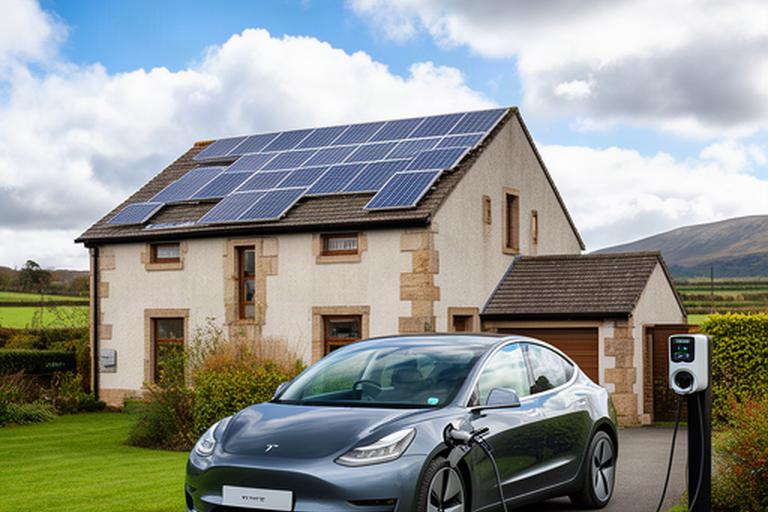
Adding an electric car to a home with solar panels or a battery can improve your energy picture, or quietly undermine it. Carstairs Nexus Ltd. plans the charger around your generation, storage and tariff so you can see where charging energy comes from and when it is used.
One joined-up plan. Clear from the start.
Heating, hot water and household use are part of the plan too. Equipment compatibility is checked before we recommend changes.
A solar-compatible charger can respond when your panels are generating more electricity than the house is using, then direct suitable surplus towards the car. You can choose how much to prioritise solar and how much scheduled charging you need.
Scottish solar output changes with the season and the weather. Short winter days can mean less surplus for the car, so a timed overnight charge gives you a dependable baseline. A diverter or home battery may also affect whether spare generation goes to the vehicle, stored energy or hot water.
We check the equipment you already have. No guesswork.
Typical pattern only; your roof, system and weather will differ.
Use solar when it is available. Keep a scheduled charge for the miles you need.
A time-of-use tariff may offer a lower unit rate during set overnight hours. We configure the charger around the tariff window and the time you need to leave, rather than relying on a manual start each evening.
Check the whole bill before switching. Standing charges, daytime use and your household's pattern all matter.
Charging is scheduled to finish before your planned departure.
Tell us when the car needs to be ready and how you typically use it. The schedule can then avoid peak-rate periods where your tariff and vehicle support it, while leaving time for charging and any preconditioning settings you choose.
The car, oven, heat pump and shower can all draw power at once. Dynamic load management adjusts the charger in response to household demand, helping keep the combined load within the available supply.
That matters in older properties where the existing supply may have less spare capacity. A site assessment tells us whether managed charging is suitable or whether a supply upgrade needs to be discussed.
Practical control, without nuisance trips.
Illustrative scenarios, not a reading from your property.
When demand rises, managed charging can reduce its draw until household use eases.The charger can adjust its output as other household loads switch on and off.
We assess your existing electrical capacity before recommending a setup.
If a supply upgrade is needed, we explain why before work is agreed.
A home battery can store energy for later use, but its settings need to suit your tariff, heating and vehicle schedule. We look at how the parts interact so the car does not draw stored energy at the wrong time for your household.
Review when the battery charges and which household loads it is set to support.
Bring generation, import, export and vehicle charging into a clearer view where compatible.
Review the schedules after the system has been in use and make sensible changes.
Example monitoring categories; available readings depend on your equipment.
Monitoring can help you spot whether charging follows your plan. We confirm app and meter compatibility during the system review.
We start with the equipment and routines you already have. Then we recommend only the changes that fit your home and your charging needs.
We look at solar generation, battery storage, heating, metering and your electrical supply.
We discuss typical travel, departure times and household demand across the day and seasons.
You receive a clear outline of recommended equipment, settings and the reason for each change.
After commissioning, we can review how the system performs and discuss schedule adjustments.
Book an energy consultation with Carstairs Nexus Ltd. in Bo'ness. We will review your existing equipment first and explain what can work together before suggesting anything new.
Serving Bo'ness, Falkirk, Grangemouth and nearby Central Scotland communities.